BPC-157 research overview — structure, published in-vitro signaling, and the analytical documentation Texas laboratories expect on every batch.
Written for the Texas research community, this reference brings together the documentation Texas musculoskeletal and gastric-research labs use for BPC-157 that labs from Austin to Houston, Dallas to San Antonio typically request when qualifying a new lot. Every batch we dispatch from our Texas warehouse ships with the analytical documentation described below.
BPC-157 (Body Protection Compound-157) is a synthetic pentadecapeptide derived from a partial sequence of human gastric juice protein. It is one of the most heavily researched stable gastric peptides in Texas laboratory work — particularly in sports-medicine adjacent research programs across Dallas and Austin.
Structure
- Sequence: GEPPPGKPADDAGLV
- 15 amino acids, no disulfide bridges
- Average mass approximately 1419.5 Da
- Notable acid- and enzymatic-stability profile
Published research signaling
In-vitro and animal-model literature describes BPC-157 acting on multiple growth-factor and angiogenesis-related pathways, including modulation of VEGFR2 expression and nitric-oxide signaling. These findings are research observations only and do not establish therapeutic outcomes.
What a verified BPC-157 COA shows
- ≥99% HPLC purity
- LC-MS confirmed exact mass
- Counterion (typically acetate) identity and percent
- Bacterial endotoxin per analytical method
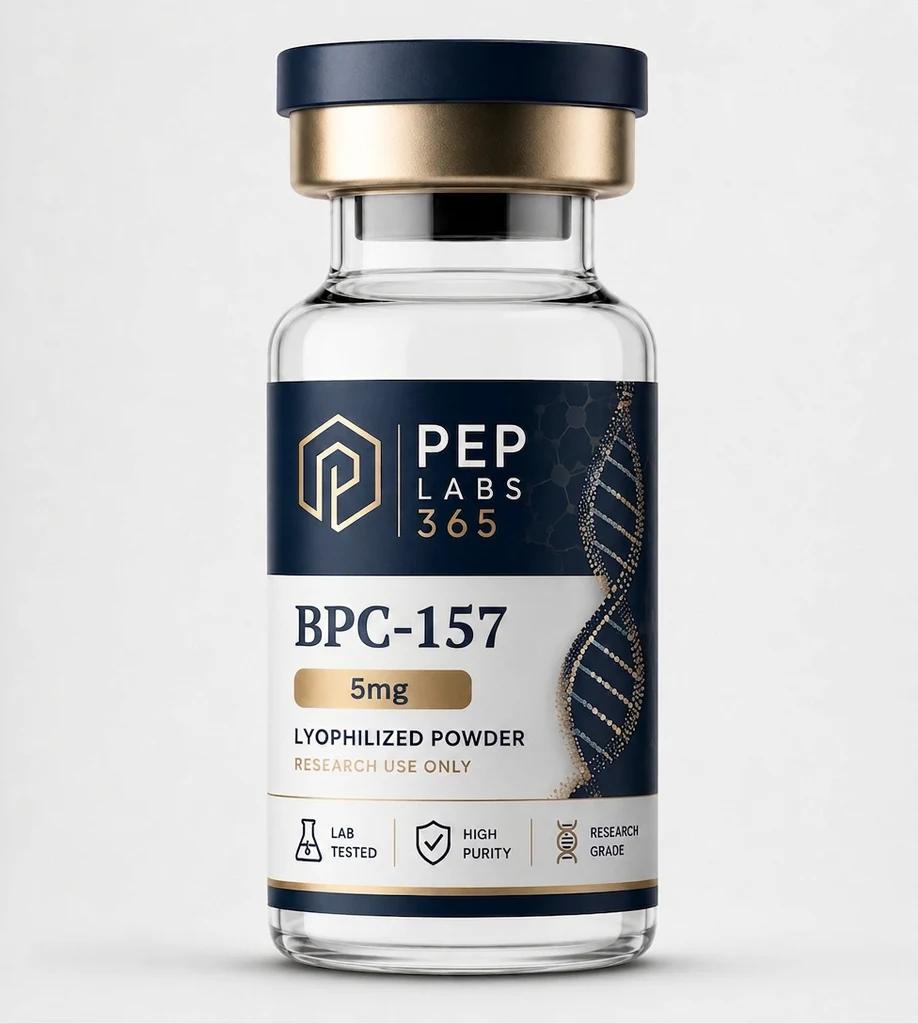
Pep Labs 365 ships every research peptide from our Texas facility with a lot-matched Certificate of Analysis, third-party HPLC purity, and LC-MS identity confirmation.